Foods That Stretch Your Budget: Making Meals Last All Month
Eggs, beans, whole chicken and the right vegetables: meet the foods with the best cost per meal and the techniques that make everything yield more.
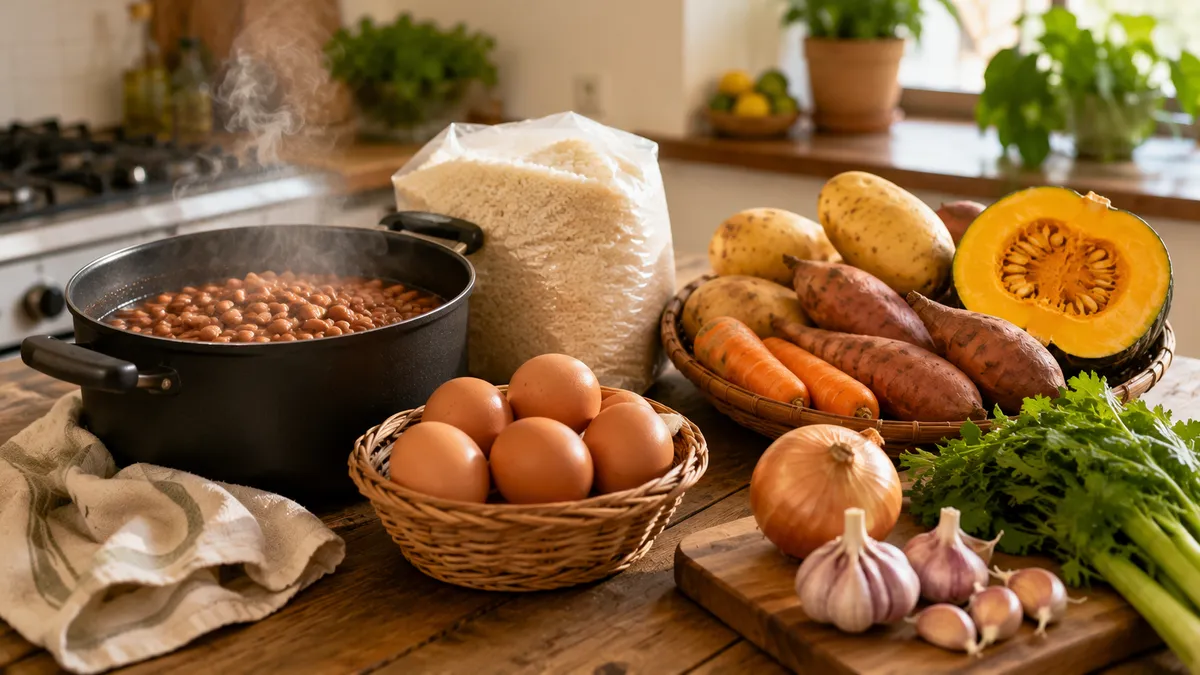
Stretching food isn't eating less, it's choosing ingredients with high value per dollar and extracting everything they offer. A few choices at the store and three kitchen techniques make the same food budget reach the end of the month with room to spare, and no monotony on the plate.
The yield champions
Eggs
Complete, versatile protein among the cheapest at the store. Breakfast to dinner: omelets with leftover vegetables, eggs over rice, a baked frittata that serves several.
Beans and other legumes
A bag of dry beans yields many portions, and the rice-and-beans duo is nutritionally smart besides being comfort food. Rotate beans, lentils and chickpeas by the week's price; batch-cook and freeze in portions.
Whole chicken (or bone-in cuts)
A whole chicken costs less per pound than separated cuts and delivers three products: the day's roast, shredded meat that becomes two more meals, and a carcass that yields homemade stock. Total-use applied to protein.
Slow-cooking cuts
Chuck, shank and similar cuts cost less and, in long cooking (a pressure cooker saves fuel), turn tender and yield sauce, which in turn yields tomorrow's pasta.
Roots and storage vegetables
Potatoes, squash, carrots, beets, cabbage and onions: cheap, durable outside the fridge (less waste) and generous in soups, purées, sautés and roasts.
Oats and basic flours
They thicken, coat, become porridge, cake and pancakes. Low cost, endless uses.
The 3 techniques that multiply any ingredient
1. Batch cooking with a double destination
Whenever you cook something slow, make double and freeze half already portioned. Same fuel, same effort, twice the meals, the guide is how to freeze the right way.
2. The leftover ladder
Every dish steps down into another: the roast chicken becomes shredded filling; the beans become soup; yesterday's rice becomes fritters or baked rice. Leftovers aren't repetition, they're ingredients already cooked.
3. Root-to-leaf cooking
Stems, peels and leaves are pure yield you already paid for at the market: techniques and recipes in root-to-leaf cooking.
Building the plate that yields
The practical formula: a grain or root base + an economical legume or protein + in-season vegetables + generous seasoning. Plan the week's combinations with the smart grocery list and turn it all into routine with weekly meal prepthe grocery budget says thanks within the first two weeks.
Official sources to check
Laws and official pages on this topic, so you can confirm the current rules and numbers before you decide.
Frequently asked questions
What's the best value protein?
Eggs and beans (with rice, which completes the protein) consistently rank among the cheapest options. Among meats, whole chicken and slow-cooking cuts usually yield more per dollar than pre-cut, packaged options.
Does budget food have to be repetitive?
It doesn't. The same base ingredients change identity with seasoning and technique: shredded chicken becomes pie, simple risotto, crepe filling; beans become purée, soup and salad. Varying the seasoning costs cents; varying the ingredient costs real money.
Does freezing help stretch food?
A lot. Freezing portions keeps leftovers from spoiling and lets you buy larger amounts at the right price. Stocks, sauces and shredded proteins freeze especially well and become the base of quick meals.