The Smart Grocery List: A Step-by-Step to Stop Blowing the Budget
From pantry inventory to the week's menu: the complete method for a grocery list that blocks impulse buys, prevents duplicates and fits the budget.
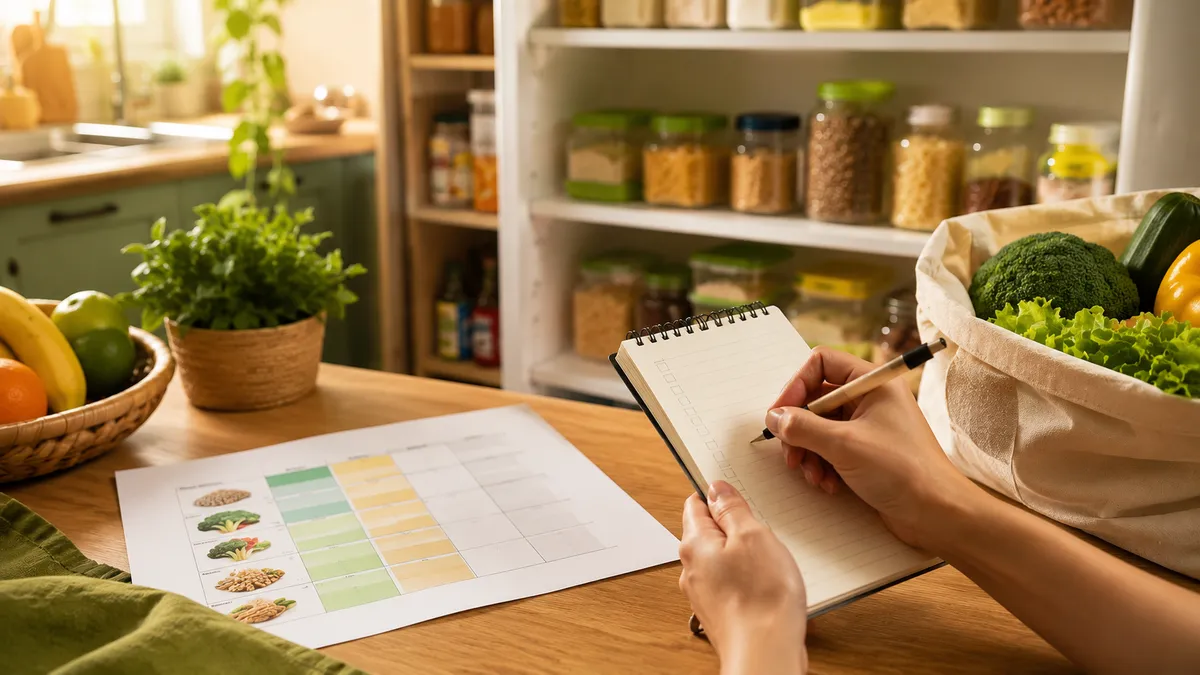
The grocery list seems trivial, which is exactly why it works. It moves decisions from the worst possible place (the store aisle, hungry, with offers shouting) to the best one: your home, with the pantry open and the budget on the table. The method below takes 20 minutes a week and visibly changes the cart total.
Step 1: Quick inventory (5 minutes)
Open the pantry, fridge and freezer and note what's running out and what's abundant. This step kills both classic wastes: rebuying what exists and letting forgotten items expire. An organized pantry reduces this step to a glance.
Step 2: The week's menu (10 minutes)
No chef's plan needed: sketch the skeleton of the week's main meals, starting with what the inventory says to use. Repeats are welcome (the same pot of beans serves the week; one roast becomes two meals). The menu is the translator between "what we'll eat" and "what we need to buy", without it, the list is guesswork.
Step 3: Build the list by store sections
Order items by aisle: produce, meat, dairy, dry goods, cleaning, hygiene. A sectioned list speeds the trip and, strategic detail, avoids extra laps through the store, where temptations live. Less zigzag, less impulse.
Step 4: Apply the savings filters
- Check seasonality: swap the week's expensive produce for the in-season equivalent;
- Mark stock-up items: non-perishables in a real sale (check the unit price) can be bought in quantity, as long as consumption is certain;
- Set the spending cap before leaving, with estimated prices next to the main items;
- One line for "extras": allow one or two planned treats. A realistic list gets followed; a puritan one gets abandoned.
Step 5: At the store, the list rules
Execution rules: don't go hungry; follow the section order; compare by unit price; and treat the list as a contract, what's not on it waits for next week. The rest of the aisle tactics are in how to spend less on groceries.
Step 6: Close the loop
While putting groceries away, update the pantry (new behind, old in front) and note the total spent. Comparing week to week shows the method working, and the money left over gets a destination in the family budget. Planned shopping pays off even more when cooking is planned too: see weekly meal prep.
Official sources to check
Laws and official pages on this topic, so you can confirm the current rules and numbers before you decide.
Frequently asked questions
Paper list or app?
Whichever you'll actually use. Paper on the fridge door has the advantage of being visible for the whole family to add what ran out; shared apps sync between household members and save the master list. The mistake is having neither.
How does a list prevent impulse buying?
It moves the decision: instead of deciding in the aisle (hungry, rushed, marketed at), you decide at home, with the pantry and budget in front of you. At the store, the rule is simple: on the list, buy; not on it, not in the cart.
Weekly or monthly shopping: which is better?
A hybrid works for most: one bigger monthly trip for non-perishables (using warehouse-club prices) and quick weekly runs for perishables. Fewer trips also mean less exposure to impulse.