How to Freeze Food the Right Way and Lose Nothing
Blanching vegetables, portioning, labels and safe thawing: the complete guide to freezing meals and ingredients without losing flavor, texture or money.
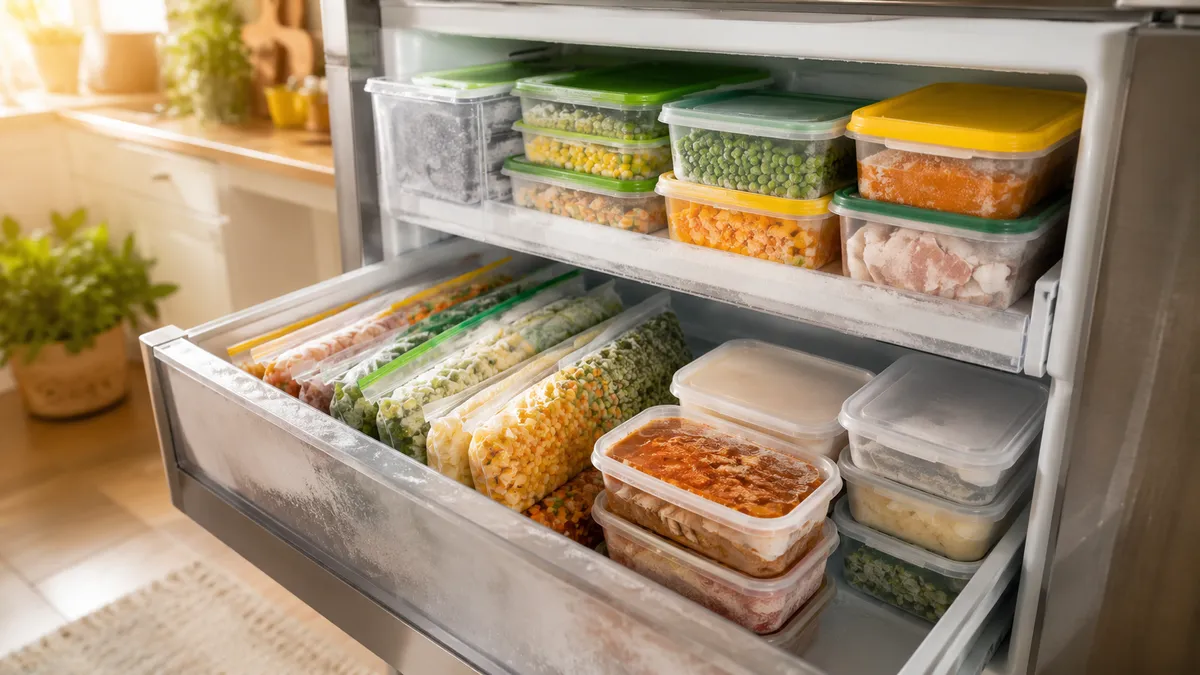
The freezer is the kitchen's most underrated savings tool: it lets you buy at the right price, batch-cook and zero out waste. But freezing wrong charges dearly, rubbery vegetables, freezer-burned meat, mystery packages with no name. The difference between a treasure freezer and a graveyard freezer is the techniques below.
The golden rule: freeze fast, in small portions
The faster food freezes, the smaller the ice crystals, and the less damage to texture. Hence: small, shallow portions, containers not overstuffed, and food already cooled before entering (hot food raises the internal temperature and harms what's already there).
Vegetables: the secret is blanching
Raw vegetables frozen directly lose color, flavor and texture. Blanching fixes it in three steps:
- Plunge chopped vegetables into boiling water for a few minutes (2–4, by size);
- Transfer immediately to a bowl of ice water, stopping the cooking;
- Dry very well and freeze spread on a tray; once firm, transfer to bags.
Freezing spread out before bagging prevents the single block, you take out only what you need.
Meats and proteins
- Portion before freezing: split the bulk sale pack into single-meal portions;
- Remove the air: air is the enemy, it causes freezer burn (dry, pale patches). Well-sealed bags with the air pressed out, or double wrapping, solve it;
- Freeze seasoned: pre-marinated meats save prep time and absorb flavor while thawing.
Ready meals: the home "frozen aisle"
Rice, beans, sauces, soups, cooked ground beef and casseroles freeze beautifully. Build individual portions in shallow containers: they thaw fast and become instant packed lunches, the base of the method we detail in weekly meal prep.
Label or chaos: pick one
Every frozen container becomes a "frozen mystery" within two weeks. Label with name and date (masking tape and a marker work) and keep a rotation rule: oldest in front, eaten first. As a general reference, most cooked dishes and meats keep good quality for about two to three months in a home freezer, writing the date is what makes the rule possible.
Safe thawing
Plan ahead: move the container from freezer to fridge the night before. In a hurry? Microwave defrost, cooking right away. Avoid the counter at room temperature, it's the zone where microorganisms multiply. And remember: thawed raw doesn't refreeze raw.
Freezer mastered, the next step is filling it wisely: buy at the right price with the smart grocery list and multiply yield with root-to-leaf cooking.
Frequently asked questions
What shouldn't go in the freezer?
Some foods lose too much texture: raw salad greens, raw cucumber and tomato, raw potato, mayonnaise and starch-based creams tend to disappoint. Eggs in the shell must not be frozen. In general, cooked dishes freeze better than delicate raw ingredients.
Can I refreeze something that thawed?
The general safety guidance is not to refreeze raw food that has thawed. If it was cooked after thawing, the finished dish can be frozen. To avoid the dilemma, freeze in small portions, thaw only what you'll use.
What's the safe way to thaw?
The safest method is in the refrigerator overnight. The microwave's defrost setting is also safe if you cook immediately after. Avoid thawing on the counter at room temperature, the range where bacteria multiply fastest.