The Refrigerator Mistake Raising Your Electric Bill Every Month
A worn door gasket makes the fridge work double without you noticing. Learn the paper test and 7 more habits that bring consumption down.
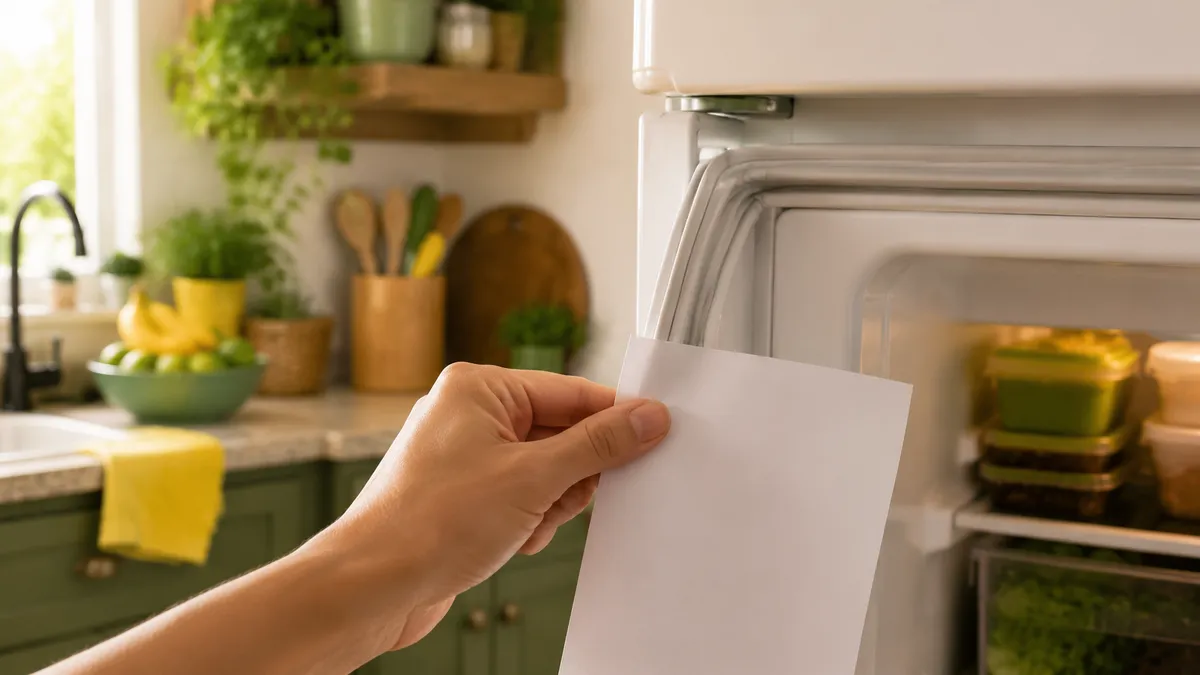
The refrigerator is the only appliance that works 24 hours a day, every day of the year. Any inefficiency in it doesn't happen once, it happens all month, silently, straight onto your bill. And the most common mistake isn't about usage: it's a part almost nobody looks at.
The mistake: ignoring the door gasket
The gasket, the rubber seal on the door, is what keeps cold in and heat out. Dried out, cracked or deformed, it lets warm air seep in continuously. The thermostat notices, the compressor kicks in more often and runs longer. Result: higher consumption every single day, with no visible sign besides the bill.
The paper test (30 seconds)
- Open the door and place a sheet of paper between the gasket and the frame;
- Close the door and pull the sheet;
- If it resists, the seal is good at that point; if it slides out easily, it's weak;
- Repeat around the door, failures are usually localized.
A weak seal has two fixes: cleaning (residue prevents sealing, wash the gasket with water and mild soap and dry well) or replacing the gasket, sold by model and simple to install on most fridges.
The other 7 habits that inflate the bill
1. Fridge jammed against the wall or the stove
The rear coils need to shed heat. Leave a few inches of clearance behind and beside it, away from the stove and direct sun.
2. Storing hot food
A hot pot inside forces extra compressor effort and raises the internal temperature, affecting everything else. Let food cool first (without leaving it out too long, for food safety).
3. Door open "to think"
Every opening swaps cold air for warm. Decide before opening, and teach the kids. Internal organization helps: whoever finds fast, closes fast.
4. Thermostat maxed out
Colder doesn't preserve better, it just costs more. Set per the manual and the season: in winter, lower settings suffice.
5. Ice buildup in the freezer
In models without auto-defrost, thick ice acts as reverse insulation and strains the motor. Defrost when the layer thickens.
6. Too empty (or too stuffed)
Chilled items help hold the temperature steady; excess blocks internal air flow. The sweet spot: full without smothering the vents.
7. Dusty coils
Once or twice a year, with the fridge unplugged, brush or vacuum the dust off the rear coils. Dust is insulation, and insulation in the wrong place is consumption.
When the appliance is the problem
If, with a good seal and correct habits, the fridge still cycles excessively, makes unusual noise or the back runs very hot, get a technician's assessment. And if the model is very old, compare the label consumption of a new efficient model, over years of continuous use, the difference can pay for the upgrade. To tackle the other bill villains, see the 10 appliances that use the most electricity.
Frequently asked questions
How do I know the fridge gasket needs replacing?
Do the paper test: close the door on a sheet of paper and pull. If it slides out easily, the seal is weak at that point. Repeat around the whole door. A dried, cracked or deformed gasket should be replaced, the part is sold by model.
What's the ideal fridge temperature?
As a general reference, around 37–40 °F (about 3–4 °C) for the fridge and 0 °F (-18 °C) for the freezer keeps food safe. Check your model's manual. Colder than that wastes energy with no preservation gain.
Does an old fridge use much more than a new one?
Old models, especially past ten years or with worn seals and insulation, tend to use considerably more than new certified-efficiency models. Before replacing, though, test the seal, settings and placement, sometimes the problem is habit, not hardware.