How to Organize Household Documents and Bills Once and for All
Build a simple home filing system with categories that work, learn how long to keep receipts and records, and digitize the essentials without fuss.
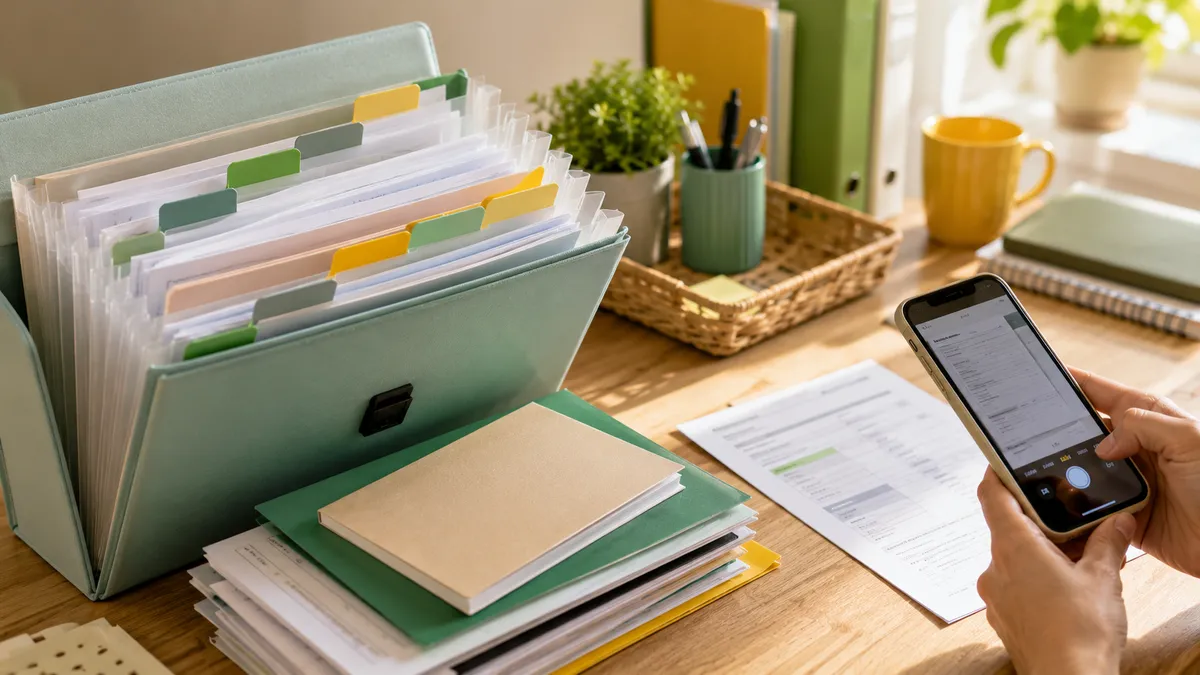
The bill that vanishes the week it's due, the receipt that's needed years later, the "deal with later" pile that only grows. Disorganized paperwork costs time, late fees and headaches at important moments. The good news: a functional home filing system takes one afternoon to build and minutes a month to maintain.
Stage 1: The great sorting
Gather every paper in the house into one place, drawers, bags, the car's glovebox, the fridge magnet. Split into four piles:
- Action: bills to pay and anything with a deadline;
- File: receipts and documents to keep;
- Scan and discard: papers whose content matters but the physical copy doesn't;
- Trash: ads and expired papers with no value, shred anything with personal data.
Stage 2: Categories that work
An accordion folder or a box with dividers covers most homes. Field-tested categories:
- Personal: certificates, IDs, work records;
- Housing: lease or deed, property tax, HOA;
- Utilities: power, water, gas, internet, one divider per type or per year;
- Health: test results, prescriptions, insurance cards;
- Vehicle: title, registration, maintenance receipts;
- Taxes: returns and supporting receipts;
- Work and income: contracts, pay stubs;
- Warranties and manuals: receipts stapled to the manuals.
Stage 3: How long to keep things
As a prudent rule: utility billsa few years in case of disputes; tax returns and receiptsfor as long as your tax authority can audit them; property and vehicle papersfor as long as you own them, and proof of debt payoff, forever. Certificates and personal documents are never discarded. These are general references; for a specific, high-stakes document, confirm with the issuing body or an accountant.
Stage 4: Digitize what you can
Your phone handles it: scanning apps (many free) turn paper into named PDFs organized in folders, mirror the same categories as the physical file. Back up to the cloud. Bills that arrive by email don't even need printing: create folders in the email itself or save the PDFs straight to the digital archive. Extra care with sensitive data: protect phone and cloud access with strong passwords.
Stage 5: The 10-minute monthly ritual
One fixed date per month (payday is a good anchor): empty the inbox, file the month's receipts, check for anything overdue. Ten minutes that prevent the next pile, and connect directly to the health of your family budgetbecause a visible bill is a bill paid on time, with no late fees and no surprises.
Frequently asked questions
How long should I keep paid bills?
A prudent common reference is keeping utility bills and receipts for a few years in case of billing disputes, and tax-related records for as long as your tax authority can review returns, often several years. For a specific important document, confirm with the issuer or an accountant.
Are digital receipts valid?
Electronic statements and bills issued by banks and utilities are generally valid, and many bills are born digital today. Keep files organized and backed up. For certain acts (like property deeds), the physical original may still be required.
What should I never throw away?
Birth and marriage certificates, property and vehicle titles, deeds, active contracts, employment and pension records, plus proof of payoff for large debts. When in doubt about an important paper, keep it.